
How Atlanta’s Heat and Humidity Can Damage Your Home (And What You Can Do About It)
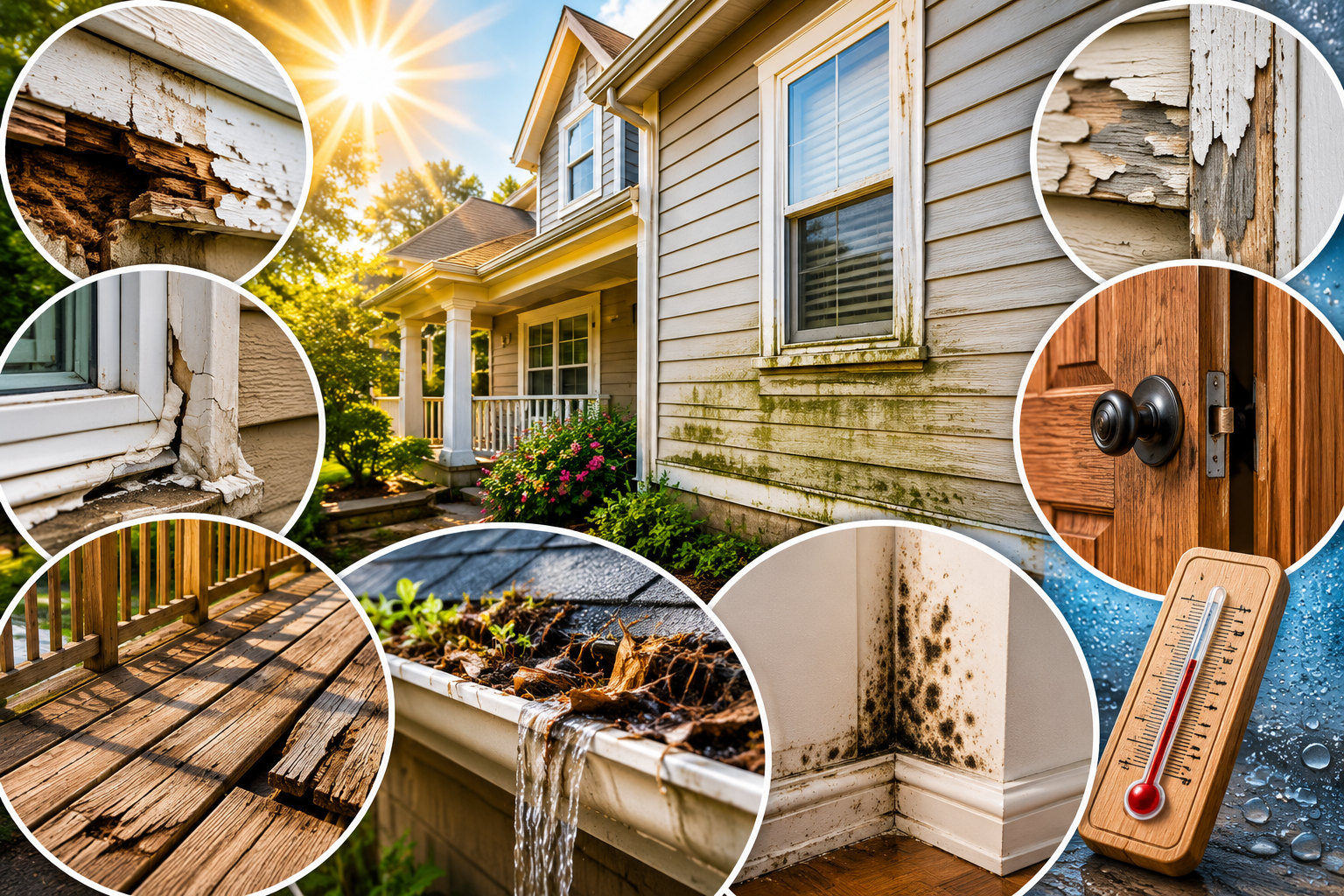
Atlanta summers have a personality all their own. The heat settles in early, the afternoon storms roll through on schedule, and the humidity lingers for weeks at a stretch. Locals learn to live with it, but the houses they live in take a beating every season.
Heat and moisture work on building materials slowly and quietly, and by the time the damage is visible, the repair is usually bigger and more expensive than it needed to be.
Most of the maintenance problems handymen see across metro Atlanta trace back to the same source. It is not poor construction or bad luck. It is the climate. Understanding how that climate affects your home gives you a real advantage, because almost every issue on this list can be caught early and fixed for a fraction of what a full repair costs later.
The danger is not one hot afternoon. It is repeated heat, moisture, expansion, contraction, and trapped water working on the same vulnerable areas season after season.
Wood Rot and Exterior Trim Damage
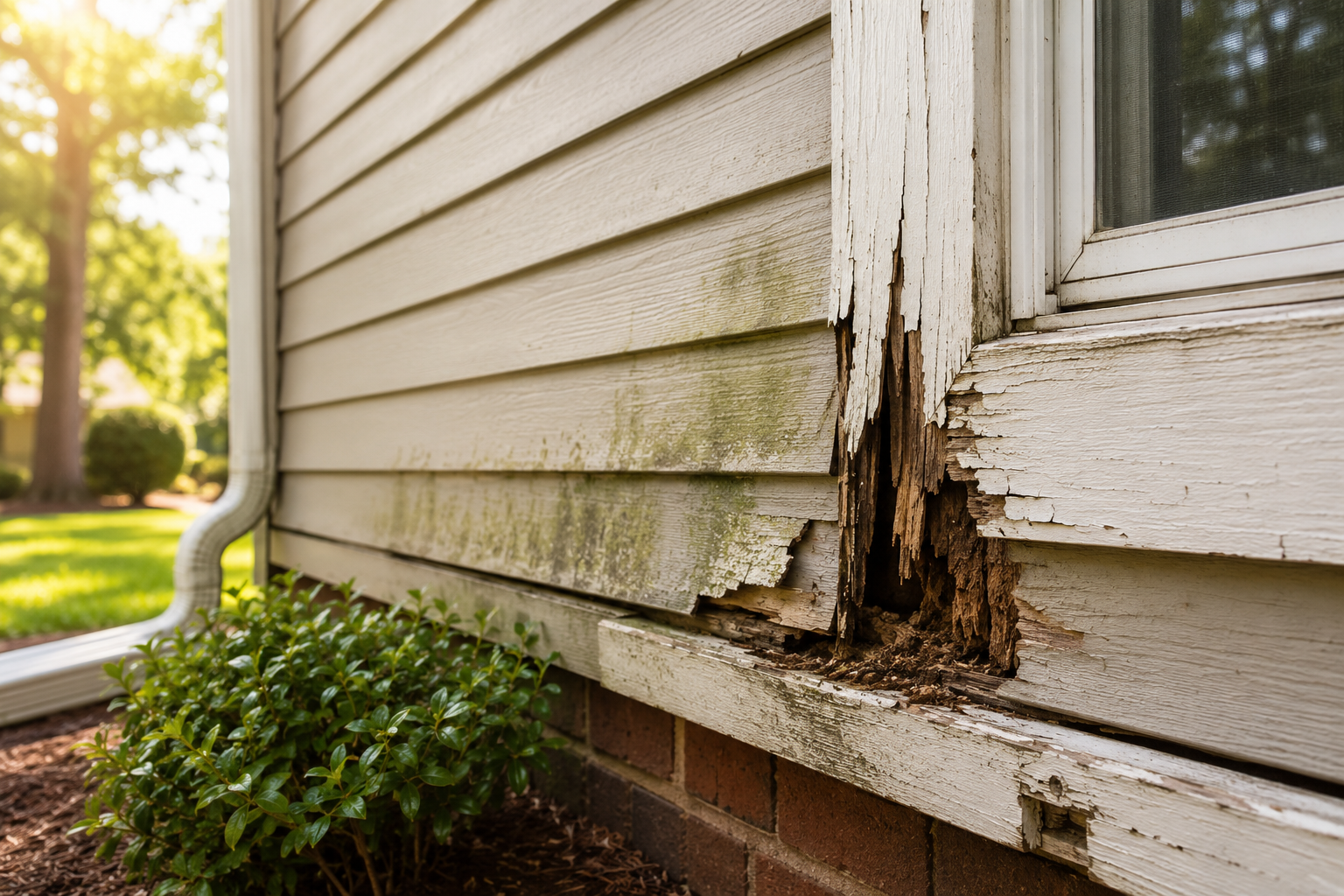
Wood is one of the most vulnerable materials on the exterior of any Atlanta home. Humidity keeps it damp far longer than it would stay in a dry climate, and wood that stays wet eventually breaks down. The most common trouble spots are the places where water tends to sit or splash repeatedly: window and door trim, fascia boards along the roofline, porch columns, and the framing around decks.
The early signs are easy to miss if you are not looking for them. Paint that bubbles or flakes in a specific spot, trim that feels soft when you press on it, or a section of fascia that looks slightly darker than the boards around it are all worth a closer look.
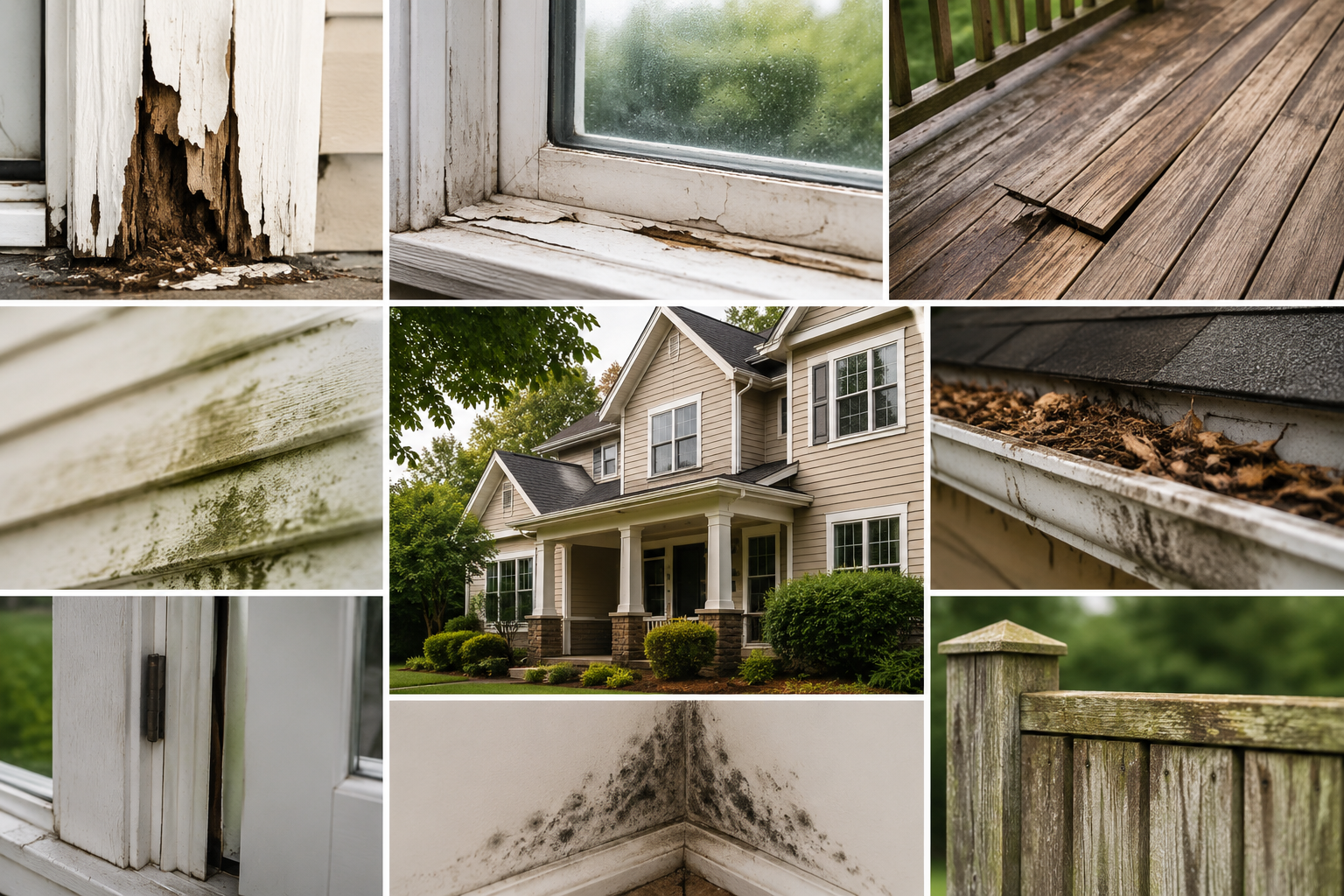
Rot spreads. A small soft patch on a fascia board can travel into the roof framing behind it, and at that point you are no longer replacing a board, you are dealing with a structural repair. Catching rot early usually means replacing a short section of trim, sealing the new wood properly, and making sure water is being directed away from the area.
Cracked Caulk Around Windows and Doors
Caulk is the quiet workhorse of your home’s exterior. It seals the gaps around windows, doors, and other openings, and it keeps water out of places it should never reach. Atlanta’s temperature swings are hard on it. The material expands in the heat and contracts as things cool, and over enough cycles it shrinks, hardens, cracks, and finally pulls away from the surface it was supposed to protect.
Once caulk fails, the gap it leaves becomes a direct path for moisture. Water works its way behind siding and trim, where it can sit against wood framing and start the same rot cycle described above. Because the failure happens gradually and the gaps are often small, this is one of the most overlooked problems in metro Atlanta homes, and also one of the cheapest to fix when it is caught in time.
Deck and Fence Deterioration
Decks and fences live outside with no protection from the elements, which puts them on the front line of Atlanta’s summer. The daily cycle of heat and moisture causes the wood to expand and contract again and again. Over a season or two, that movement shows up as warped boards, raised nail and screw heads, splintering surfaces, and railings that no longer feel solid.
Moisture is the bigger long-term threat. Deck boards that stay damp, especially where debris collects in the gaps between them, begin to soften and rot from the surface down. Fence posts set in the ground are exposed to moisture from both sides and often fail at the base.
Paint Failure
Heat and moisture are a difficult combination for exterior paint, and Atlanta delivers plenty of both. Paint protects the surface underneath it, but when moisture gets trapped beneath the film, the bond breaks down. The result is peeling, blistering, and cracking, often in the same areas year after year.
A lot of homeowners treat failing paint as a purely cosmetic issue, but it is usually a signal. Paint that peels in a particular spot is often telling you that moisture is reaching the surface from somewhere, whether that is a caulk gap, a piece of failing trim, or poor drainage nearby.
Gutter Problems
Atlanta’s summer storms can drop a lot of water in a short window of time, and gutters are what stand between that water and your home. When gutters are clogged with leaves, pollen buildup, and debris, they cannot move water fast enough. It overflows the edges and spills down the side of the house, exactly where you do not want it.
That overflow sets off a chain of problems. Water running down siding accelerates paint failure and wood rot. Water pooling at the foundation can lead to settling and moisture intrusion in crawl spaces and basements. Saturated soil around the foundation washes out landscaping and creates the damp conditions that mold thrives in.
Door and Window Issues
If your doors start sticking and your windows get harder to open as summer sets in, humidity is usually the reason. Wood absorbs moisture from the air and swells, which changes the fit of doors in their frames and windows in their tracks. A door that closed easily in the spring can drag against the frame by July.
This is more than an annoyance. A door or window that does not seat properly often does not seal properly either, which lets conditioned air leak out and hot, humid air leak in. That makes the home less comfortable and pushes up cooling costs during the months when the heating, ventilation, and air conditioning system is already working its hardest.
Mold and Mildew Growth
Warm temperatures and high humidity create close to ideal conditions for mold and mildew, which is why these growths are so common in Atlanta homes. They tend to appear first in the spaces that stay damp and get little airflow: attics, crawl spaces, bathrooms, and the areas around exterior penetrations where pipes and vents pass through walls.
Mold is both a maintenance problem and a health concern. On the maintenance side, it feeds on damp building materials and breaks them down over time. On the health side, it can affect indoor air quality and cause issues for anyone in the home who is sensitive to it.
What to Check Before the Next Atlanta Summer Storm
Staying Ahead of the Atlanta Climate
The Atlanta climate is genuinely hard on homes, but very few of the problems it causes are sudden. They build slowly, season after season, which means they can almost always be caught and corrected before they turn into major repairs. Routine inspections, a little preventative maintenance, and quick attention to small issues are what protect both your comfort and your home’s value over the long run.
The homeowners who stay ahead of moisture and heat damage spend far less over time than the ones who wait until something fails. If you have noticed signs of moisture damage, deteriorating trim, sticking doors, or other maintenance concerns, the team at Your Handyman Atlanta can help identify problems early and make the necessary repairs before they become larger issues.
Need a second set of eyes on your home?
Your Handyman Atlanta can inspect problem areas, repair exterior trim, reseal gaps, fix doors and windows, address deck or fence issues, and help you stay ahead of Atlanta’s heat and humidity.
Call (404) 585-1856