
The Three Leaks We Found in One Hour, and Not One of Them Was Dripping
A routine monthly maintenance visit at an Atlanta condo turned up three separate places water had been escaping for months. Nobody had called about a leak. That is exactly the problem with hidden water leaks, and exactly what a maintenance plan is for.
Homeowners call us the day the ceiling turns brown or the floor goes soft. By then the repair is drywall, paint, trim, sometimes cabinetry and flooring. And the actual plumbing fix was the cheapest part of the whole job.
The leaks that cost the most money are not the dramatic ones. They are the few-drops-a-day leaks behind a cabinet door you open twice a week. Below are three we documented on a single scheduled maintenance visit, what each one signals, and how to check for it yourself tonight with a flashlight.
1. The Water Ring in the Bottom of the Sink Cabinet
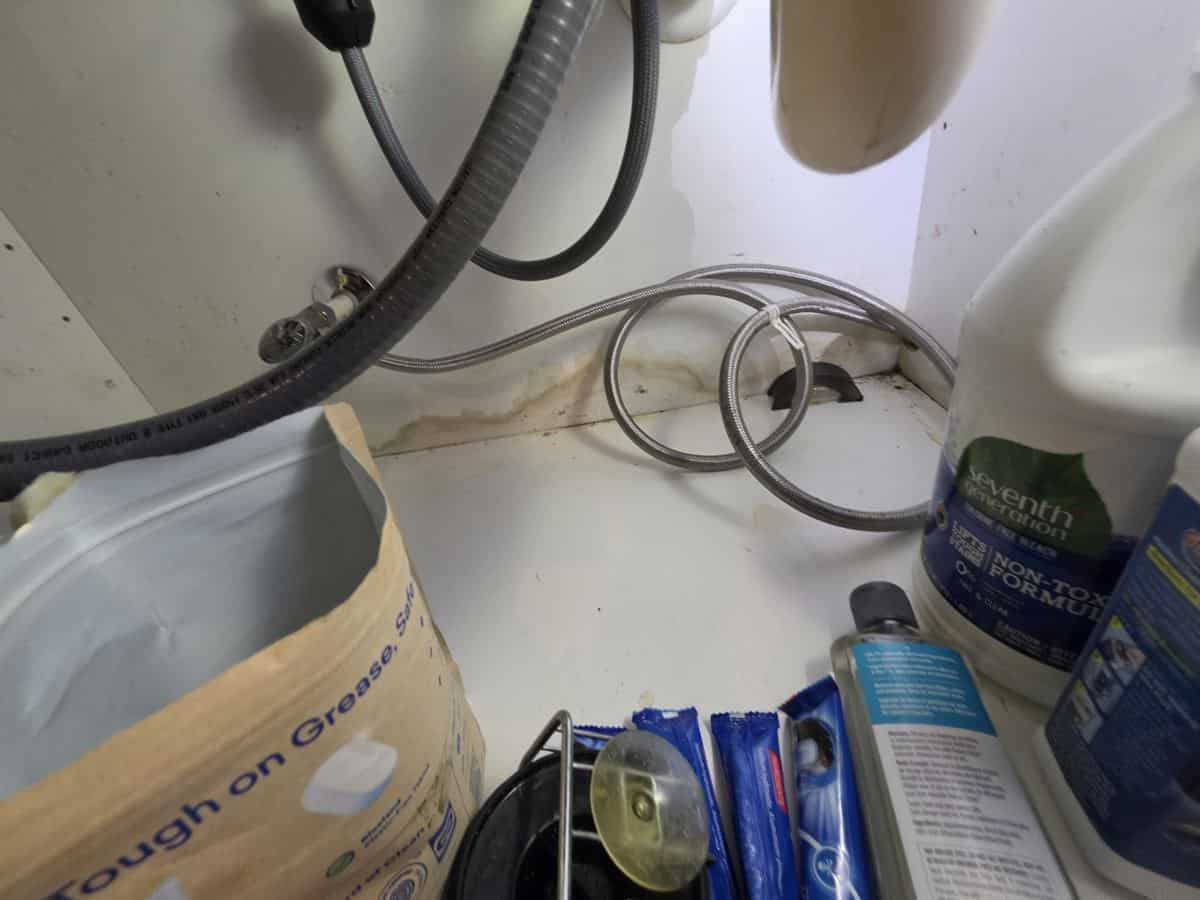
A dry stain is not an old problem you can ignore. It is a leak that happens while water is moving: a weeping supply connection, a loose P-trap slip joint, or a drip running down the back of the disposal. Everything dries between uses, so you never catch it in the act.
What it costs if you leave itParticleboard cabinet floors swell and delaminate, the toe kick rots, and the moisture finds the subfloor. A twenty-minute fitting tightening becomes a cabinet replacement.
Check it yourselfClear everything out of the cabinet, run the faucet for two minutes with the flashlight on the trap and the shutoffs, then fill the basin and let it drain fast. Feel the back corners with your hand: damp particleboard feels cool and soft before it looks wrong.
2. The Stain in the Ceiling Corner
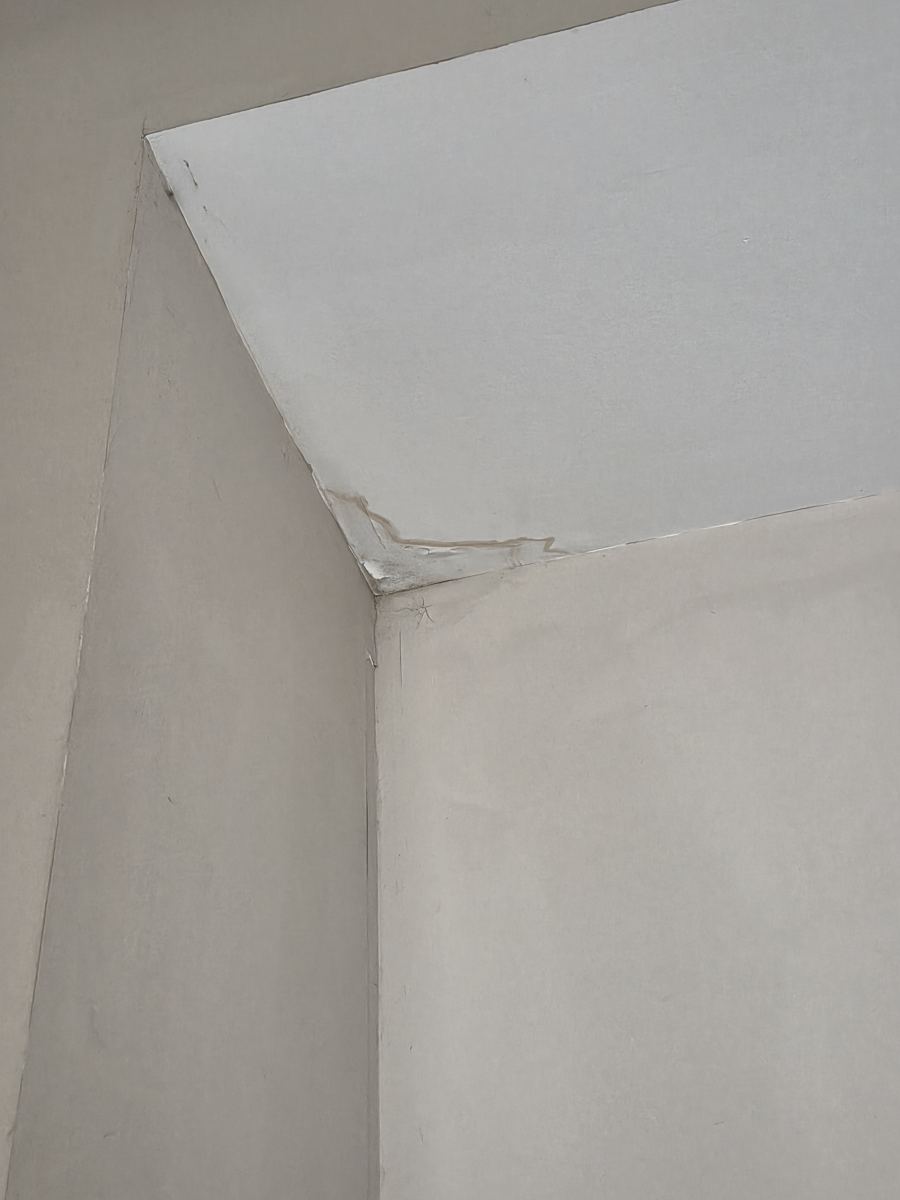
Water rarely stains directly below its source. It runs along a joist or the top of a wall plate and appears at the first seam it reaches, which is why a ceiling stain in a corner usually means the leak is somewhere else entirely: a shower pan, a toilet flange, a tub overflow gasket, or a supply line in the floor above.
What it costs if you leave itDrywall stays wet, paint blisters, and in Atlanta humidity mold follows. Repainting over the stain without finding the source just hides the evidence: the stain comes back, bigger. Once the source is fixed, drywall repair is the straightforward part.
Check it yourselfPhotograph the stain with a coin next to it for scale and re-shoot it in two weeks. Growth means active. Also press gently: firm means old and dry, spongy means wet right now.
3. Behind the Vanity: The Wall Is Gone and the Shutoffs Are Crusted
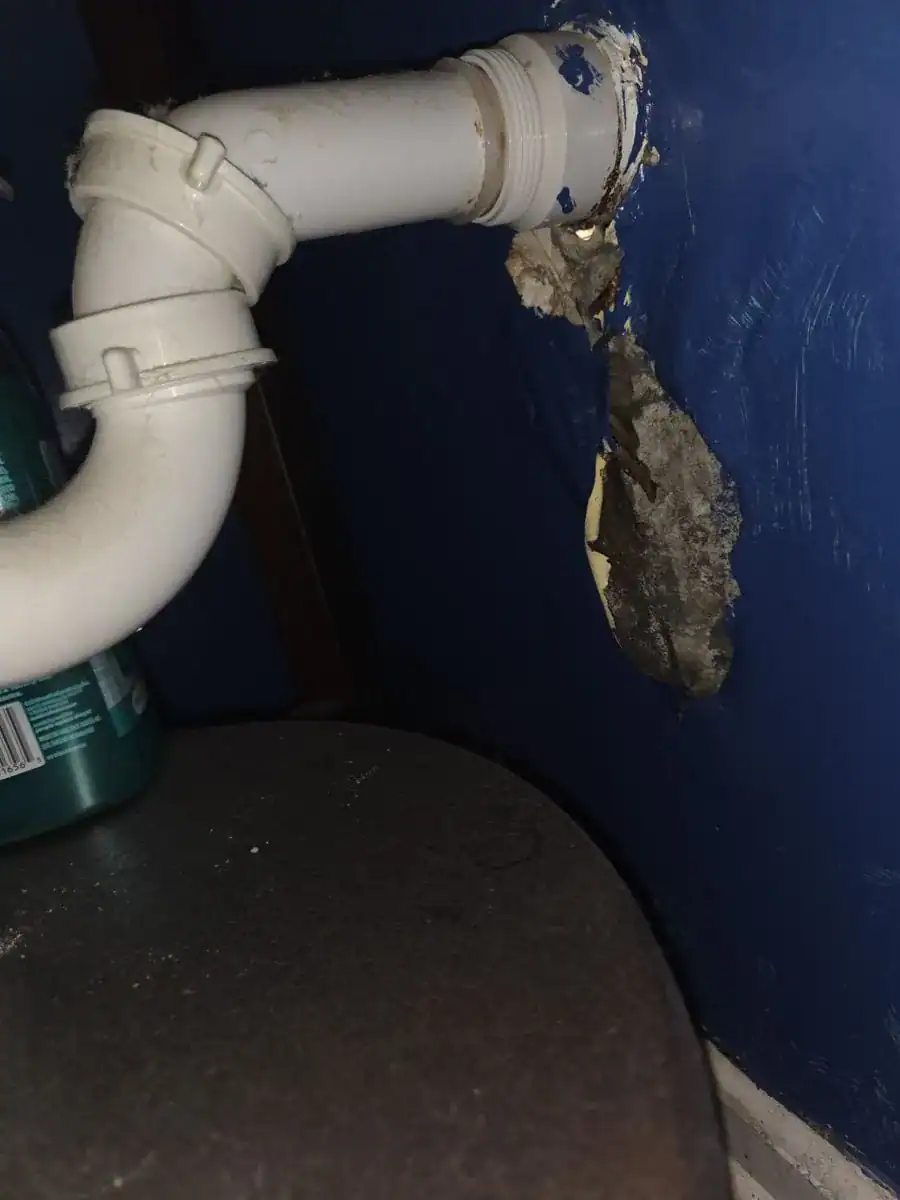
The hole a drain passes through is one of the few places where the back of your wall is exposed. When the joint at that penetration seeps, or the drain arm gets bumped out of alignment, water wicks straight into the gypsum. A vanity hides it perfectly, until the wall starts coming off in sheets like this.
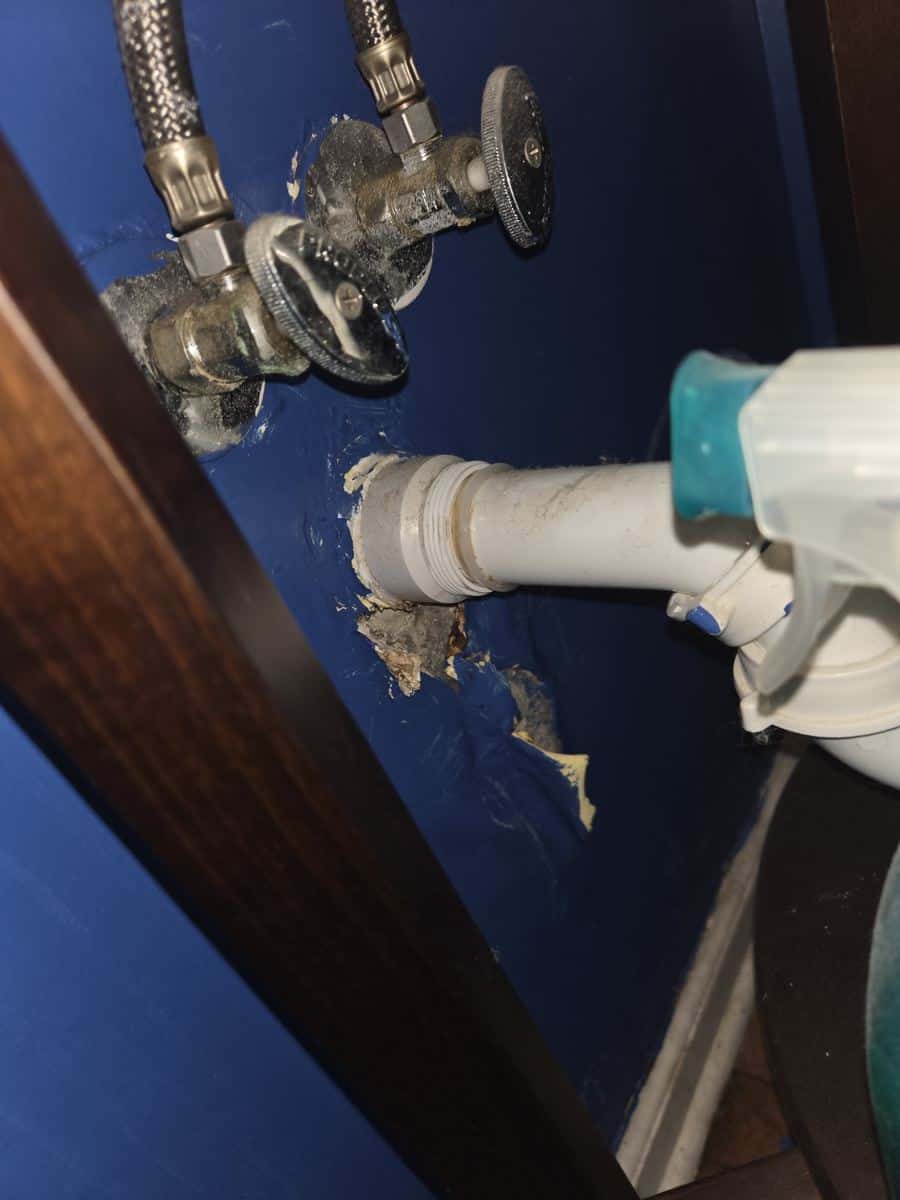
Same cabinet, other angle. The mineral crust on the shutoff valves is the second half of the story: those stops have been sitting in the damp the whole time. Angle stops are what you reach for in an emergency, and they are the part everybody forgets exists: a valve that has not been turned in fifteen years often will not turn at all, and the ones that do sometimes split at the stem when they finally move.
What it costs if you leave itThe wall loses the ability to hold a fastener, the vanity base swells, and the repair widens from a fitting to drywall patching, texture and paint, plus mold remediation if it has reached the cavity. And during an actual burst, a seized shutoff turns a mop-up into a flood, because the only remaining option is the main, if you can find it.
Check it yourselfEmpty the vanity, shine the light at the wall behind the drain, and look for bubbling paint, dark edges or missing paper face: any of the three means moisture, not age. Then close and reopen each stop and run the faucet. Do that on a weekday morning, not at 11pm during the emergency.
Why a Maintenance Plan Catches All Three
Every leak above was found on one scheduled visit, by one person, with a flashlight, in the time it takes to make a punch list. No moisture meter, no camera down a wall, just someone whose job that hour was to look.
That is the whole idea behind our Monthly Maintenance Plan. Once a month, a Your Handyman Atlanta tech comes out and works the same list:
$150per visit, once a month
- Under-sink supply lines, traps and cabinet floors in every kitchen and bath
- Toilet bases, supply lines and shutoff valves
- Water heater connections, pan, drain line and age
- Ceilings and walls below wet rooms, checked for new staining
- Tub and shower caulk and grout before water gets behind the tile
- Exterior hose bibs, washing machine hoses and the dishwasher connection
- Your running punch list, the small repairs you have been meaning to get to
Plan visits are $150 per visit, and any additional work for plan members is billed at our member rate of $112.50 per hour instead of the standard $125. Everything is billed by the hour, honestly, never flat-rate guesswork.
Serving Buckhead, Sandy Springs, Dunwoody, Decatur, Brookhaven, Chamblee, Roswell, Johns Creek and Metro Atlanta. Licensed, insured and bonded, with 100+ years of combined experience.
The Five-Minute Version, Tonight
- Flashlight under the kitchen sink. Hand on the back corners.
- Same under both bathroom vanities.
- Look up at the ceiling under every upstairs bathroom.
- Look behind the toilet at the floor where the supply line meets the valve.
- Look at the floor around the water heater.
If you find a stain, don’t paint it. Photograph it and call us The earlier we see it, the smaller the repair. Related reading: why Atlanta homeowners need a monthly maintenance plan.
Found a Stain Tonight?
Book an appointment online, call or text, or send us an email. The earlier we see it, the smaller the repair. We typically respond within 15 minutes during normal business hours.